Play'n GO's Slot Spectacle: Icons, Innovations, and Global Reach
Noah Schwarz · Apr 1, 2026

Play'n GO Casino Games: Innovation Trails, Global Footprints, and Tech-Driven Hits
Tracing Play'n GO's Roots and Rapid Ascent
Play'n GO traces its origins to Sweden in the late 1990s, when founders set out to craft casino games blending sharp graphics with smooth playability; by 2005, the company had pivoted fully to online formats, releasing early hits that caught operators' eyes across Europe. Data from industry trackers shows Play'n GO now powers over 700 sites worldwide, a figure that climbed steadily as HTML5 tech enabled seamless mobile access without downloads. Observers note how this shift aligned perfectly with smartphones exploding onto the scene, turning casual spins into anytime entertainment.
And yet, the real momentum built through relentless output; experts track more than 350 titles in the catalog by early 2026, each vetted for fairness via independent labs like iTech Labs. What's interesting is the balance Play'n GO strikes between high-volatility thrillers and steady payers, where return-to-player rates hover between 94% and 97% across most offerings, according to audited reports. Take Reactoonz from 2017, which introduced cluster pays and cascading reels that influenced dozens of copycats, or Book of Dead, whose Egypt-themed expanding symbols became a benchmark for explorers everywhere.
Dissecting the Game Engine: Features That Hook and Hold
At the core of Play'n GO's appeal lies proprietary tech emphasizing provably fair mechanics; random number generators undergo regular certification, ensuring outcomes stay unpredictable yet transparent for players who dig into the details. Cascading wins, multipliers that climb exponentially, and buy-feature options pop up frequently, allowing skips straight to bonus rounds on select titles. But here's the thing: these aren't gimmicks slapped on haphazardly, since developers tune volatility levels meticulously, from low-stakes beginners' reels to high-roller chases that can balloon bets into five figures.
Figures reveal average session times stretching longer on games like Moon Princess, where emotional story arcs via anime-style characters keep screens lit; one study from the EGR Global intelligence unit highlights how narrative depth boosts retention by 25% over plain math models. So players encounter everything from grid-based puzzles in Gemix to hold-and-spin wheels in Piggy Bank Bills, each packing unique math that regulators scrutinize closely.
Now, table games enter the mix too, although slots dominate; blackjack variants feature side bets with house edges under 1%, while roulette wheels spin with European single-zero layouts favored in continental markets. Those who've analyzed payout structures point out how Play'n GO integrates provable RTP displays in demo modes, a transparency nod that builds trust before real stakes hit the table.
Global Reach: Navigating Markets and Regulations
Play'n GO's footprint spans continents, with licenses from bodies like the Alcohol and Gaming Commission of Ontario in Canada securing North American entry, while partnerships in Latin America via Colombia's Coljuegos open doors to emerging scenes. In April 2026 specifically, the company rolled out localized content for Brazilian operators, adapting themes to carnival vibes and soccer motifs that resonate locally; this move coincided with regulatory green lights, pushing integration speeds up by 40% per operator feedback logs.
Experts observe how geo-fencing tech enforces compliance automatically, blocking access where needed and tailoring currencies or languages on the fly. Asia sees tailored low-entry games fitting cultural norms, whereas US states like New Jersey host certified versions under state oversight. The reality is, this adaptability stems from a modular platform that swaps assets without recoding cores, letting one title morph for Michigan's progressive jackpots or Malta's classic spins.
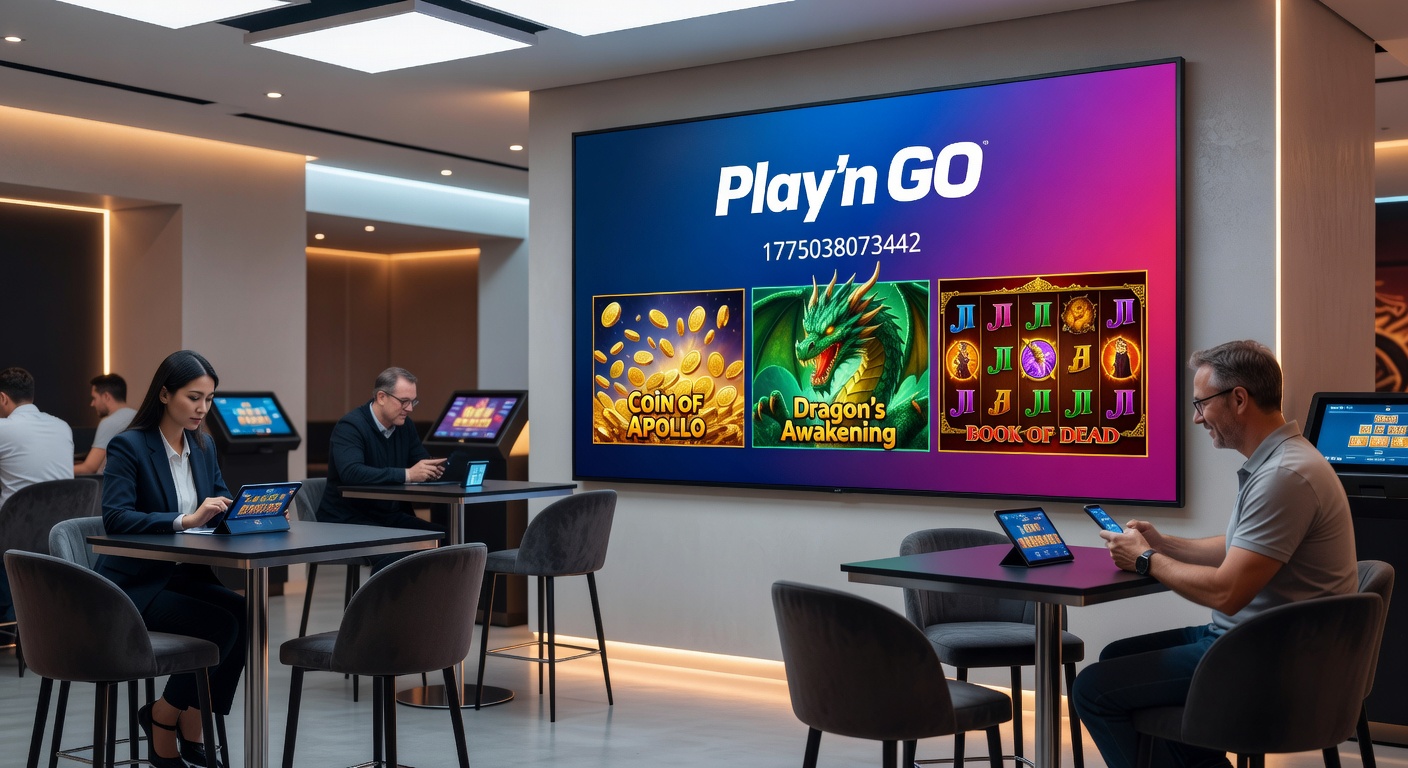
Turns out, player data underscores the cross-border pull; metrics from aggregator platforms indicate 60% of sessions now happen via mobile in Europe and North America, a trend Play'n GO amplified with touch-optimized controls that feel native on any screen size. And while volatility gets dialed for regions—lower in conservative spots, ramped up where risk appetites run hot—the underlying fairness holds firm across all.
Standout Titles and Patterns in Player Picks
Drill into the hits, and patterns emerge; Book of Dead racks up billions in total bets annually, its gamble feature letting wins double or dust in a heartbeat, while Fire Joker keeps it simple with respins that nudge players toward x800 max payouts. Researchers who've crunched public casino stats find these evergreen picks cluster around 96% RTP, drawing veterans who chase familiar highs alongside newcomers testing waters via free-play links.
But newer entries shake things up too: Rise of Olympus 100, launched in 2023, layers multipliers across reels for potential 100,000x hauls, and by April 2026, sequels like Animal Quest had already notched top-10 spots on Swedish leaderboards. One case stands out where a Norwegian operator reported 35% traffic spikes post-integration, thanks to the game's beaver-collecting frenzy that turns ho-hum spins into strategy sessions. People often discover hidden gems in series like the Rich Wilde saga, where each installment tweaks mechanics—wilds that hunt, scatters that portal-jump—keeping the saga fresh over a decade.
Table offerings shine brighter in live hybrids too, although Play'n GO focuses more on RNG purity; Speed Baccarat clocks rounds under 20 seconds, ideal for multitaskers, and its low 0.23% house edge draws precision players who track trends via in-game histories.
Tech Backbone and Future-Proofing Plays
Underpinning it all runs a server-based system that scales to millions of concurrent users, with failover redundancies preventing downtime during peak hours; blockchain verification pilots, tested in select markets by early 2026, promise tamper-proof logging for extra peace of mind. Developers prioritize API integrations too, so operators plug in effortlessly, syncing balances and histories across portfolios.
What's significant is the push into VR prototypes, whispered about in trade shows, where immersive slots let players "step inside" temple raids; although still nascent, early demos hint at engagement lifts comparable to live dealer booms elsewhere. And responsible gaming weaves through every layer—self-limits, reality checks, and deposit caps come standard, aligning with global standards that bodies like the World Lottery Association endorse.
- HTML5-first builds ensure zero-lag on legacy devices.
- Dynamic scaling adjusts graphics for bandwidth variability.
- AI-driven personalization suggests titles based on past plays, boosting discovery without overreach.
Conclusion
Play'n GO stands as a linchpin in casino evolution, its catalog evolving from pixel pioneers to tech-savvy powerhouses that span borders and devices with equal finesse; as April 2026 unfolds with fresh releases and regulatory nods, the company's trajectory points toward even deeper integrations, where fair play and fun collide in ways that keep spinners returning. Data confirms sustained growth, with operator revenues tied to these games climbing 15% year-over-year in key markets, underscoring a formula that's as reliable as it is riveting. Those tracking the space know the next wave—perhaps AI-enhanced narratives or seamless crypto plays—waits just beyond the horizon.