Player Progression Pathways: Transitioning from Free Sessions to Tournament Participation in Slots and Table Games
Leon Bauer · Jun 16, 2026
Player Progression Pathways: Transitioning from Free Sessions to Tournament Participation in Slots and Table Games
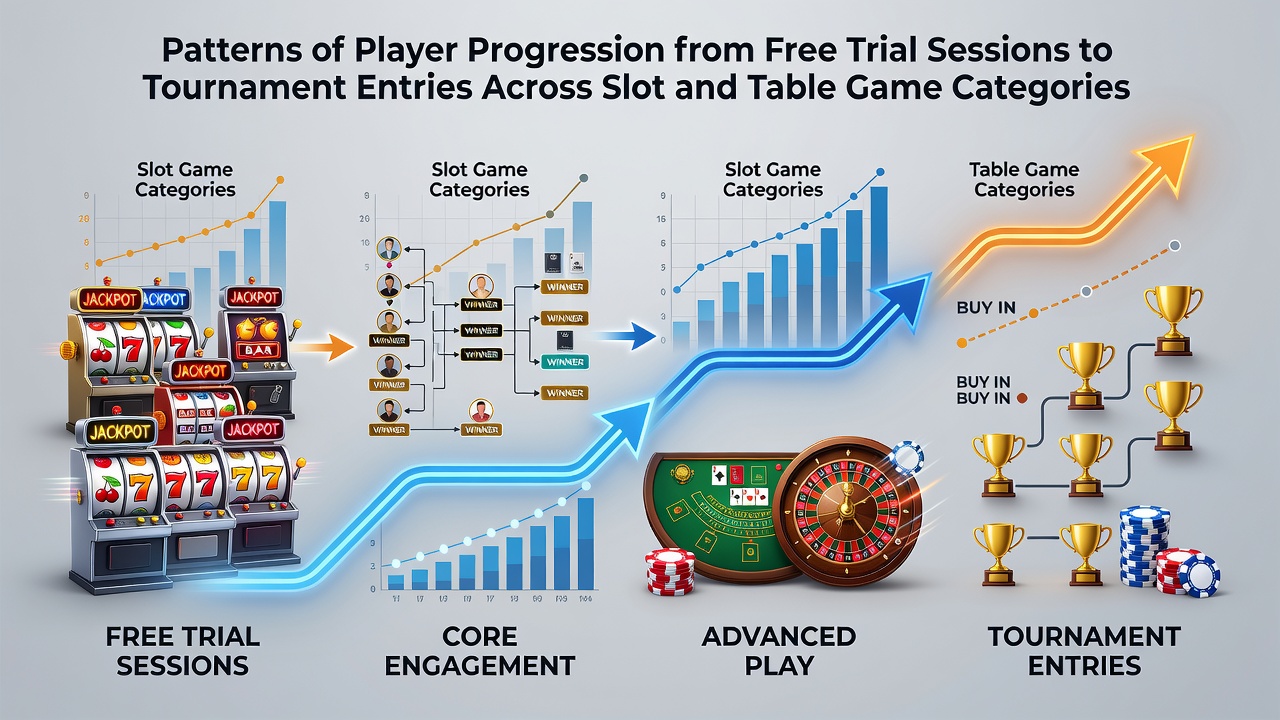
Patterns of player movement from initial free trial sessions into paid tournament entries show distinct trajectories depending on whether participants engage with slot categories or table game formats, and data from multiple markets reveals measurable differences in retention and conversion rates across these segments.
Free trial sessions serve as entry points where individuals test mechanics without financial commitment, and industry reports indicate that slot trials generate higher session volumes while table game trials produce steadier conversion paths toward structured events.
Initial Engagement Through Demo Access
Observers note that players typically begin with unlimited demo modes on slot titles, where reel mechanics and bonus features receive immediate exposure, and this volume-driven approach contrasts with table game trials that emphasize rule comprehension and strategy testing before any entry into competitive formats.
Research conducted across North American and European platforms shows slot demos account for approximately 65 percent of all free session starts, whereas table game trials represent a smaller share yet demonstrate longer average session durations once initiated.
Conversion Trends by Game Category
Data indicates slot players move from trials to tournament entries at rates influenced by progressive jackpot visibility and frequent promotional triggers, while table game participants advance when skill-based elements such as blackjack decision trees or roulette probability tracking become familiar.
One analysis of platform logs from 2024 through early 2026 found slot trial users entered their first tournament within an average of 4.2 sessions after the demo phase, whereas table game users required 6.8 sessions on average before committing to entry fees.
Regional Variations in Progression Patterns
Markets in the United States display faster slot-to-tournament transitions in states with established online frameworks, and figures from the Nevada Gaming Control Board highlight increased participation in slot-focused events during peak promotional periods.
Meanwhile Australian regulatory summaries reveal table game players progress toward live dealer tournaments at higher rates when demo interfaces include integrated strategy tools, and these patterns differ from Canadian provincial data where slot tournaments draw broader initial trial audiences.
Role of Promotional Structures
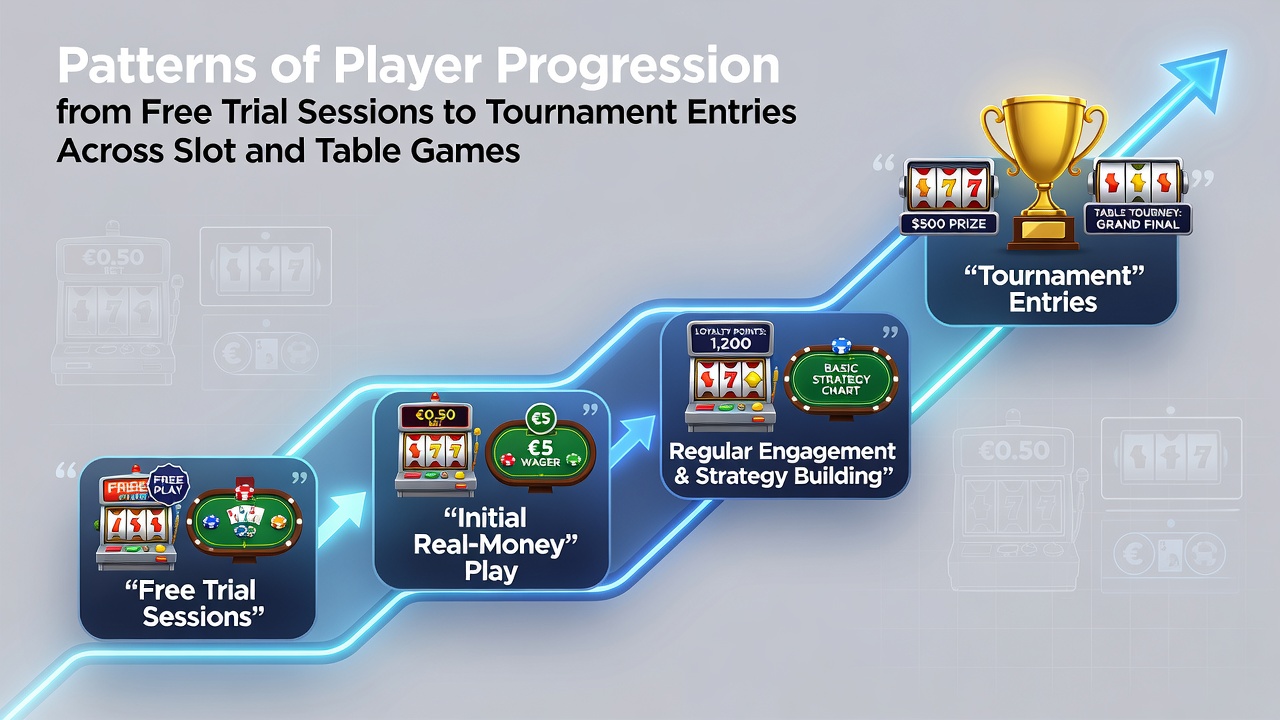
Promotional ladders that reward demo completion with tournament credits accelerate movement in both categories, yet slot pathways rely more heavily on volume-based rewards while table game routes emphasize milestone achievements tied to hand histories or betting patterns.
Reports compiled by the European Gaming and Betting Association document that integrated reward systems increased tournament entries by 28 percent among slot trial users and 19 percent among table game users during monitored periods leading into 2026.
Skill and Engagement Factors
Table game participants often accumulate knowledge through repeated demo exposure before entering events, and this preparation phase produces measurable differences in completion rates compared with slot tournaments where outcomes remain predominantly random.
Slot players who advance quickly tend to favor high-frequency spin styles developed during trials, whereas table game entrants demonstrate greater retention when they apply learned probability concepts in competitive settings.
June 2026 Platform Observations
Platform activity tracked through June 2026 shows continued growth in hybrid events that combine slot and table game segments, and these formats attract crossover participants who began in one category during free sessions before expanding into the other.
Cross-category movement appears more common among users who complete at least three distinct trial types before their first tournament registration.
Conclusion
Patterns across slot and table game categories demonstrate that free trial sessions function as foundational stages leading to tournament participation, with conversion influenced by session volume in slots and strategic familiarity in table formats.
Regional data sources continue to track these transitions as markets evolve, providing ongoing insight into how initial engagement shapes later competitive activity.