Pathways from Practice to Prize: Trial Modes Bridging Bonuses and Competitions in Mobile Roulette and Blackjack
Noah Schwarz · May 28, 2026

Pathways from Practice to Prize: Trial Modes Bridging Bonuses and Competitions in Mobile Roulette and Blackjack
Portable devices have transformed how players approach roulette and blackjack, and trial modes now serve as entry points that connect practice sessions directly to structured bonus sequences and tournament entries. These systems allow users to test mechanics on smartphones or tablets before committing real funds, and data from regulatory bodies shows increasing integration across platforms. According to reports from the American Gaming Association, mobile participation in table game variants grew steadily through 2025, with trial features playing a central role in user progression toward paid events.
Operators design trial modes to mirror live conditions closely, which means players encounter the same wheel physics in roulette or card dealing algorithms in blackjack during free sessions. This setup creates chains where successful trial outcomes unlock bonus credits or multiplier opportunities that carry forward into competitive brackets. Researchers at institutions tracking digital gaming note that such linkages reduce the barrier between casual testing and structured play, while maintaining compliance with regional standards.
How Trial Modes Establish Initial Connections
Users begin in trial environments that simulate portable roulette layouts or blackjack tables without financial risk, and completion of set objectives often triggers the first layer of bonuses. These might include additional spins on side bets or extended time in practice rounds that mirror tournament formats. The process builds familiarity with interface controls specific to touchscreens, where swipe gestures replace physical chip placement, and analysts observe that this prepares participants for the pace of actual competitions.
Systems track performance metrics during these trials, such as accuracy in bet placement or decision timing, and feed those statistics into player profiles. When thresholds are met, automatic enrollment pathways open toward events scheduled on the same portable applications. This creates a seamless flow where early practice directly influences later access, and evidence from industry monitoring indicates higher retention rates when these links operate transparently.
Bonus Chains and Their Role in Progression
Bonus sequences typically unfold across multiple stages, starting with small rewards from trial completion and expanding into larger prize pools tied to tournament participation. In portable blackjack setups, a chain might begin with matched credits for correct splits during demos and progress to entry tokens for timed events. Roulette trials often link wheel result predictions to multiplier bonuses that apply in competitive rounds, creating cumulative advantages for consistent performers.
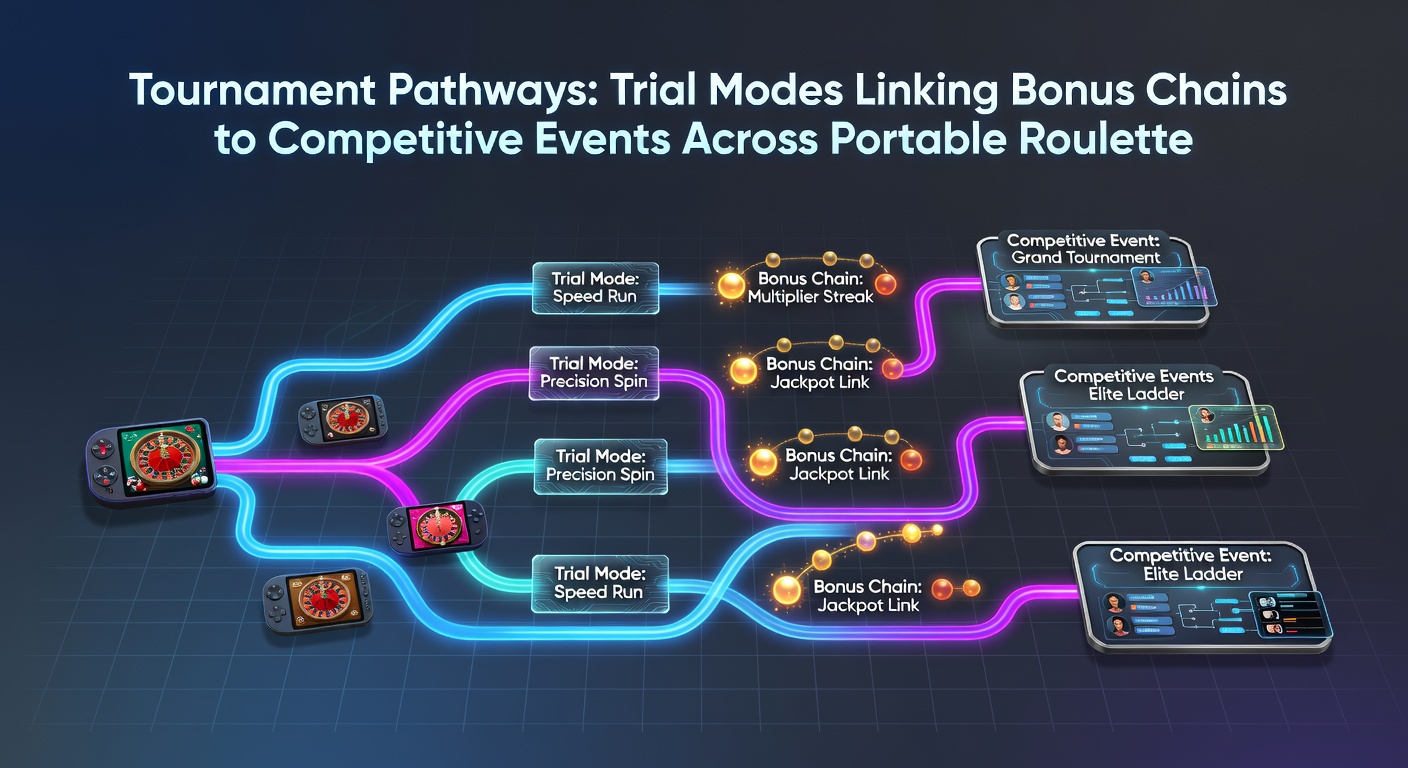
These chains operate through backend algorithms that monitor engagement across devices, ensuring portability remains central. Players switching between tablets and phones maintain their progress, and updates scheduled for May 2026 aim to standardize cross-device synchronization further. Data compiled by the Australian Institute of Criminology highlights similar patterns in mobile table game ecosystems, where bonus continuity supports sustained involvement without disrupting regulatory limits on promotional offers.
Competitive Events in Portable Environments
Tournaments hosted on mobile platforms for roulette and blackjack emphasize real-time leaderboards that update during live sessions, and trial-derived bonuses often determine starting positions or seed rankings. Participants enter these events through pathways initiated in practice modes, which means early performance shapes competitive opportunities. Observers note that portable formats allow global access, with time zones accommodated through staggered rounds that keep engagement high across regions.
Blackjack tournaments frequently incorporate elimination structures based on chip counts earned partly from trial bonuses, whereas roulette events focus on cumulative winnings from selected betting patterns. Both formats rely on secure portable networks to handle entries and results, and figures from the Canadian Gaming Association reveal steady growth in such mobile competitions through recent years. The integration ensures that bonus chains from trials do not merely reward practice but actively feed into prize distribution during events.
Interconnections Across Platforms and Future Developments
Portable roulette and blackjack share common backend frameworks that link trial data to tournament brackets, allowing operators to adjust difficulty or bonus values based on aggregated user patterns. This interconnected approach supports regulatory oversight while delivering consistent experiences across devices. Studies from European research centers on digital entertainment indicate that these linkages contribute to clearer player progression models, reducing confusion around how practice translates to competition.
Yet the systems continue evolving, with enhancements planned around May 2026 focusing on improved analytics that refine bonus allocation. These changes build on existing structures without altering core mechanics, and they aim to maintain fairness across all portable setups. Industry reports emphasize that the emphasis remains on measurable performance rather than isolated trial results, creating balanced pathways that accommodate varying skill levels.
Conclusion
Trial modes in portable roulette and blackjack now function as foundational elements that connect bonus mechanisms directly to tournament participation through structured chains and performance tracking. The result is a cohesive system where practice on mobile devices leads naturally into competitive formats, supported by data from multiple regulatory and research sources. As platforms advance toward 2026, these interconnections are expected to strengthen further while preserving the objective links between initial trials and final events.